
Farmstead Chronicles
How to Start Homesteading: 5 Steps to a Self-Sufficient Life
May
How to Start Homesteading: Building a Self-Sufficient Life from the Ground Up
If you have been wondering how to start homesteading — really start, from right where you are — you are not alone.
There is a question a lot of people are sitting with quietly right now.
What if I could actually do this?
What if I could grow my own food, raise animals, learn the old skills, and build something real with my own two hands?
What if a simpler, more self-sufficient life is actually possible — for someone like me, starting from right where I am?
That question is not small.
And we do not think it is accidental.
Here at Promised Land Ranch and Goods, we believe that the pull toward a more grounded, intentional, self-sufficient way of living is something God plants in certain hearts for a reason.
Not to frustrate you with a dream that never comes.
But to walk you somewhere worth going.
And today, we want to help you take the first honest steps.
How to Start Homesteading: What God Says About It First
Before we get into soil tests and chicken coops and seed-starting trays, we want to plant something here — because faith is the foundation of everything we do at Promised Land Ranch and Goods.
And a life built by hand, rooted in provision and purpose?
We believe Scripture has something beautiful to say about that.
Matthew 6:33 (KJV) says:
“But seek ye first the kingdom of God, and his righteousness; and all these things shall be added unto you.”
There is an order to things in His design.
Seek Him first. Root your life in what matters. And the provision — the garden, the pantry, the animals, the skills, the land — follows in its time.
Ephesians 3:20 (KJV) reminds us:
“Now unto him that is able to do exceeding abundantly above all that we ask or think, according to the power that worketh in us.”
The farmstead dream in your heart?
He put it there. And He is more than able to bring it to life in ways you have not even thought to imagine yet.
So as you read through these steps today, hold them loosely.
Let them be a beginning, not a blueprint.
Let God be the architect of your particular version of this life.
You can read and search the full KJV Bible free at YouVersion,
It Is Not About Having the Perfect Setup
Let us go ahead and address the thing that stops most people before they ever start.
The idea that you need more than you have.
More land. More money. More knowledge. More time. More of whatever it is that the prettiest homestead accounts seem to already have.
Can we gently say — that is not true.
Knowing how to start homesteading does not begin when the conditions are perfect.
It begins when you decide to start.
You can begin in a small house.
You can begin in the suburbs with a raised bed and a jar of sourdough starter on your windowsill.
You can begin today, this week, with what is already in your hands.
Because the heart of a self-sufficient life has never been about acreage.
It has always been about intention.
The daily choice to make something instead of buy something.
To tend something instead of scroll past something.
To slow down long enough to build something that actually lasts.
That is something every person reading this can do — no matter where they are starting from.
Starting With the Right Land
If land is part of your dream, the foundation of your homestead success will be knowing what you are working with before you plant a single seed or bring home a single animal.
Soil quality matters more than most beginners realize. A simple soil test will tell you exactly what your ground needs — what to amend, what to add, what to leave alone. It saves years of guesswork and frustration.
Water access is equally important. A well, a pond, or a natural spring changes everything — for your garden, for your animals, and for the daily rhythms of a working homestead. Know what is available on any property before your heart gets too attached.
Zoning laws are the piece most first-timers overlook entirely. Before you fall in love with a piece of land, check local regulations on livestock, home businesses, and building restrictions. What is allowed varies more than you would expect even between neighboring counties.
Your growing zone matters too. Not every crop and not every animal thrives everywhere. The USDA Plant Hardiness Zone Map is a free tool that helps you identify your growing zone before you plant. Find your zone here.
The Tools That Will Carry You Through
Homesteading is honest, physical, unglamorous work.
And the right tools make the difference between a discouraging experience and a deeply satisfying one.
We learned early on that quality upfront is always worth it. The shovel that breaks after one season, the pruners that rust out before the first harvest — those save nothing.
Invest in solid hand tools first: a good shovel, a rake, a sturdy pair of pruners. They will be your most-reached-for tools day in and day out.
If you are breaking serious ground for a larger garden, a tractor or tiller becomes less luxury and more necessity.
A chainsaw earns its keep quickly — for clearing land, for building projects, for keeping wood on hand.
And if you plan to start plants indoors before the last frost, seed starters and grow lights will change your growing season in ways that surprise you.
Start with what the next season requires and build from there. You do not have to have everything. You have to have enough to begin.
 How to Start Homesteading With Your First Garden
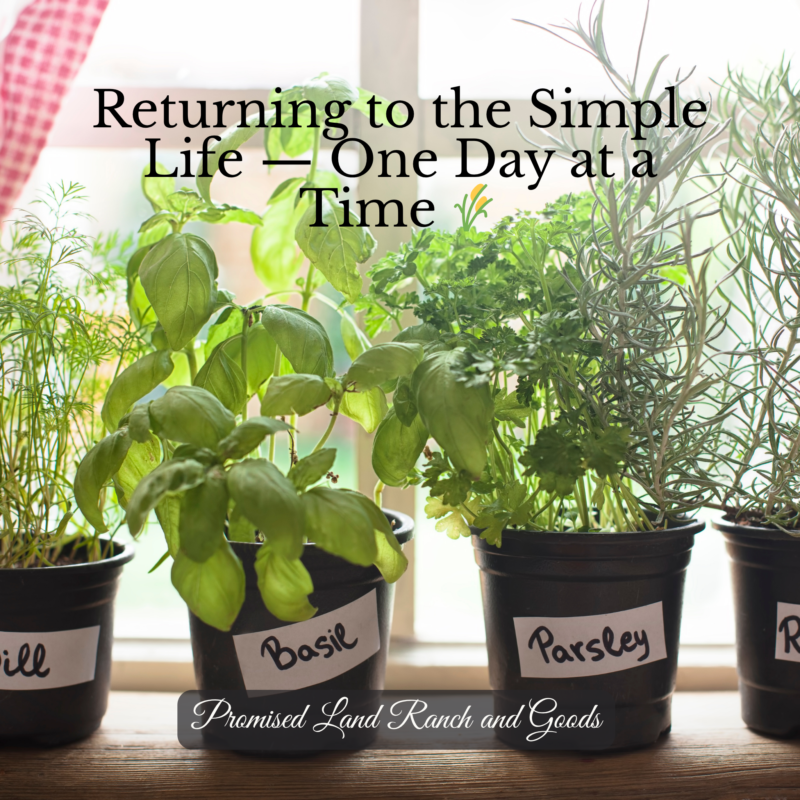 How to Start Homesteading With Your First Garden
One of the first questions people ask when learning how to start homesteading is what to grow.
And the answer is always: start simpler than you think you need to.
There is nothing quite like the taste of food you grew yourself. Once you have eaten a tomato still warm from the vine, store-bought will never be the same.
Decide early on whether raised beds or in-ground growing makes more sense for your space. Raised beds give you better drainage and weed control. In-ground gardening is more affordable when you are working a larger footprint. Both are good — know your space and choose accordingly.
Sunlight is not negotiable. Most vegetables need six to eight solid hours of direct sun each day. Walk your space at different times and observe before you choose your location.
When it comes to what to grow first — keep it simple.
Hardy, productive crops like tomatoes, cucumbers, squash, and potatoes are forgiving for beginners and rewarding enough to keep you encouraged through the learning curve.
One good harvest will change everything.
How to Start Homesteading With Animals
Knowing how to start homesteading with animals comes down to one principle above all others.
Start small. Grow slowly.
Chickens are the natural beginning for most homesteaders, and for good reason. They are low maintenance, they provide fresh eggs daily, they help manage pests in the garden, and they bring a kind of warmth and personality to the farmstead that is hard to describe until you have experienced it.
Beyond chickens, rabbits are a wonderful fit for smaller spaces — easy to manage and a practical, manageable protein source. Goats are hearty and purposeful, excellent for clearing brush and providing milk — but they require solid fencing and a patient keeper. Pigs are productive for meat, but they demand sturdy enclosures, consistent feeding, and a good amount of space.
Whatever animal you start with — give them what they need to thrive.
A well-kept animal is a happy one. And a happy animal is a productive one.
The Skills That Make Homesteading Work
Here is the truth about homesteading that no one tells you when you are first dreaming about it.
The land and the animals and the tools are not the hard part.
The skills are.
Not because they are impossibly difficult. But because they take time. They take practice. They take seasons of trying and learning and adjusting and trying again.
And that is completely fine.
Knowing how to start homesteading means knowing which skills to build first — and then building them one at a time.
Basic carpentry will carry you further than almost any other skill — for fencing, animal shelters, and the steady stream of repairs that come with any working property.
Food preservation is the skill that transforms a harvest into a full pantry. Canning, dehydrating, and freezing are all learnable and deeply satisfying once you get the hang of them.
Firewood preparation matters even if you do not heat your home with it.
Water collection and filtration becomes essential sooner than you expect if you rely on a well or keep animals.
Build one skill at a time.
Let each season teach you something the last one could not.
That is how a real homestead life is built — not all at once, but faithfully. One season, one skill, one lesson at a time.
We will be walking through each of these skills right here in the Farmstead Chronicles — so stay with us.
🌾 This Week’s Table Challenge
This week, we want you to do one simple thing.
Sit down with a piece of paper — not your phone, not a notes app, a real piece of paper — and write down three things you want most from a self-sufficient life.
Not what looks good. Not what impresses anyone.
What do you actually want?
Fresh eggs every morning. A garden that feeds your family. Homemade bread on the counter. A pantry you actually built. More quiet. More intention. More presence.
Write it down.
Then choose one small step you can take this week to move toward even one of those things.
One step. That is all.
Share it with us in the comments below, or tag us with #PLRandGoods and #PLRandGoodsCommunity — we genuinely love hearing what God is stirring in your heart.
🕊️ Come Explore The Quiet Nook
Whether you are just beginning to learn how to start homesteading or you are already a few seasons in, building a self-sufficient life feeds the hands and the table.
But the soul needs tending too.
If today’s post stirred something deeper in you — a longing for more peace, more of God in the everyday rhythm of your home — we invite you to visit The Quiet Nook, our collection of devotionals, journals, and faith resources created for women who want to go deeper.
Not just pretty content.
Real depth. Real faith. Real encouragement for the quiet moments of your day.
Browse The Quiet Nook → https://plrandgoods.com/product-category/the-quiet-nook
🌾 More from the Farmstead Chronicles
This post is the first in an ongoing series right here on the Farmstead Chronicles — where we break down the homesteading life into real, manageable steps so you can move forward with confidence instead of overwhelm.
We will be here every week. So bookmark this page, follow along, and come back.
There is always something good growing here.
Explore the Farmstead Chronicles → https://plrandgoods.com/farmstead-chronicles
📬 Get Grace Notes in Your Inbox Every Sunday
Every Sunday at 2:00 PM, we send out Grace Notes — our quiet, faith-filled weekly letter from the farmstead.
No noise. No hustle. No pressure.
Just a little Scripture, a little encouragement, a farmstead update from our kitchen, and a gentle challenge to carry into your week.
If you have not joined us yet, we would love to have you at the Sunday table with us.
Do you have a specific homesteading topic you would love for us to dig into next? Drop it in the comments below — we read every single one and truly appreciate our community of like-minded farmstead folks who show up, ask questions, and grow alongside us.
Together, by His grace, we are building something good.
👉 Visit us at PLRandGoods.com
In His Love, Promised Land Ranch and Goods. 🌾
